
MENTAL[IZING] HEALTH: BERGNER ARTICLE STIRS A DEBATE
Newsletter# 76

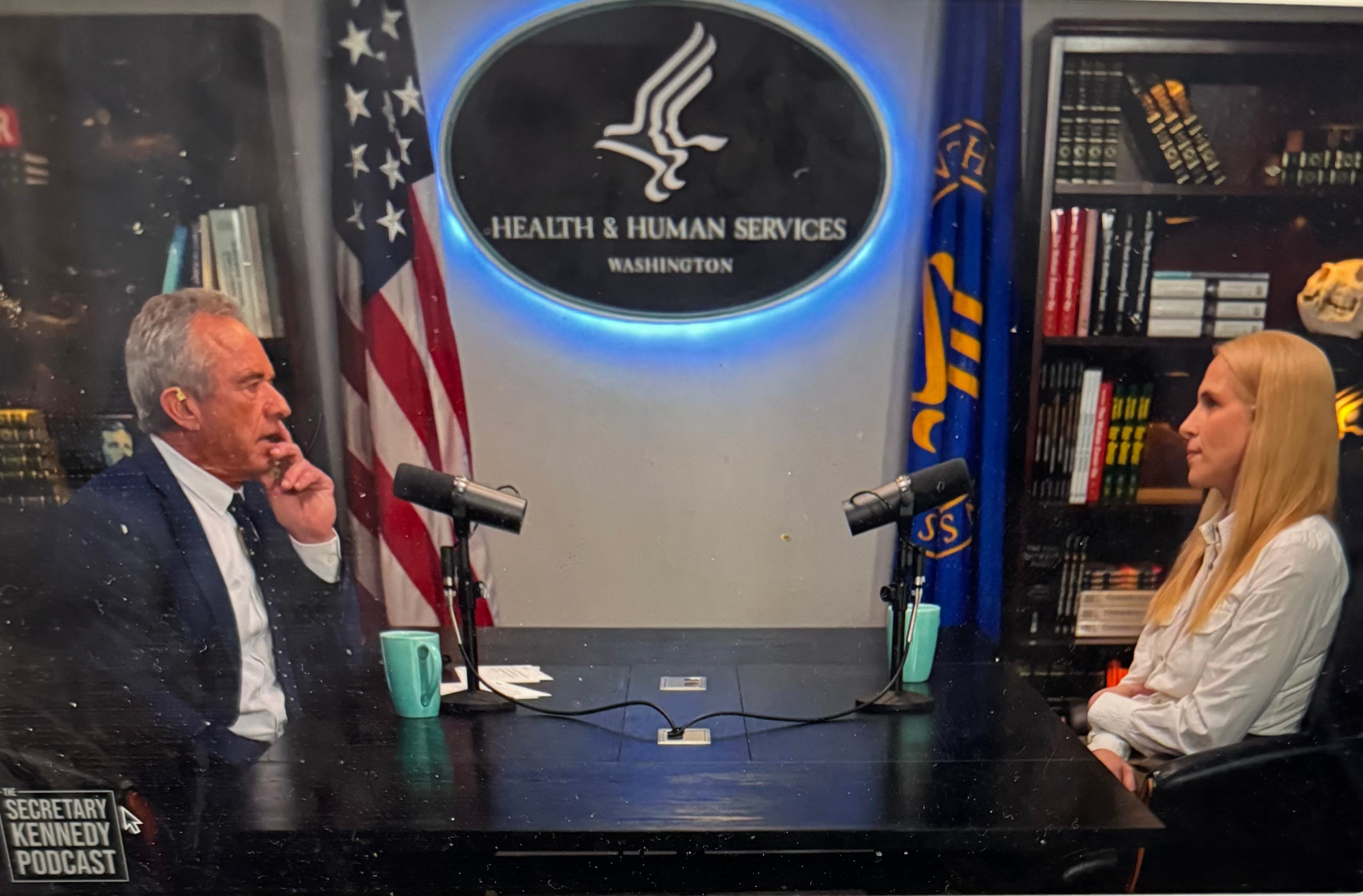
In today’s newsletter, I want to dwell on Daniel Bergner’s recent piece in the New York Times [https://www.nytimes.com/2026/05/15/magazine/rfk-jr-antidepressants-ssris-psychiatry.html?unlocked_article_code=1.ilA.5lIn.-YzgmeS4D7Q8&smid=nytcore-ios-share&utm_source=substack&utm_medium=email], a piece that has aroused a minor firestorm of discussion amongst mental health professionals, even clinician/patient/activists [https://substack.com/home/post/p-198911123?selection=cd8cb9fe-ac84-47ff-907d-a88cb6f671f1#:~:text=The%20left%20has%20spent%20so%20much%20energy%20being%20horrified%20that%20RFK%20Jr], and has taken me awhile to sort what I believe.
Based on the recent MAHA conference on Mental Health and Overmedicalization, Bergner zeroes in on overprescribing as central to RFK Jr’s concerns, emphasizing that pharmacological solutions are merely one option amongst others. Expansion of treatments that are non-pharmacological will be encouraged, but tellingly, these are not specified or elaborated upon. Although Bergner refers to RFK Jr as “ever polarizing,” he follows him in evading the role that psychotherapy might take on in light of the overprescription problem.
RFK Jr’s campaign for “fundamental psychiatric reform” is based on a mixture of several different issues that deserve to be disentangled. The first is simply that too many Americans [roughly 1 out of 6] are on antidepressants; the second is the issue of their efficacy [a number of studies suggest that they are not much better than a placebo]; and the third is that they cause difficulty in curtailing usage [RFK Jr claims expertise and that they are harder to get off of than heroin]. Let us note that while it seems excessive that so many Americans are on drugs, it is far from clear how to interpret this. Has our society grown collectively more depressed? Are we being helped by this stunning but ambiguous number? For example, we have no idea whether it might be optimal for 1 out of 4 Americans to be on antidepressants or perhaps 1 out of 10. In my experience, primary care physicians are more casual in writing prescriptions [and much less thorough in following patient responses] than psychiatrists; so there is a question of who is responsible for the problem, insofar as there is a problem.
There is research that challenges the efficacy of antidepressants, but there are also many people who feel that these medications benefit them. Indeed, in none of the pieces I read is it mentioned that research has suggested that it is the combination of antidepressants with psychotherapy that has the greatest efficacy in treating depression.[i]
The issue of withdrawal has come to be more widely recognized; this was not the case originally and is a good example of a patient-led initiative. RFK Jr’s claim to be an expert regarding withdrawal from heroin versus antidepressants is ludicrous, and seems to be patently false For example, see:

Bergner traces the emergence of antidepressants to the medical model that sought to commit mainstream psychiatry into being a science. Leaving psychoanalysis in the rear-view window, it ended up getting a little ahead of itself: remember when mental disorders were supposed to be chemical imbalances, where medication would allegedly serve to rebalance neurotransmitters? This turned out to be more fantasy than cold, hard science.
Bergner is aware of the powerful, steamrolling PR engine propelling this campaign. He introduces Thomas Szasz and Allen Frances as counterexamples, labeling them as critical psychiatrists. The psychiatrist Awais Aftab has responded to Bergner by questioning the oversimplified binary contained in the distinction between mainstream and critical psychiatry [as well as in Bergner’s interpretation, of Szasz]. As Aftab notes, there is no good reason simply to ignore psychiatrists who happen to fall somewhere between, like those committed to “explanatory and methodological pluralism and theoretical developments like embodied cognition, enactivism, complex dynamic systems, phenomenological psychopathology, psychodynamic psychiatry, social determinants of health” [https://www.psychiatrymargins.com/p/the-szaszian-heart-of-maha-psychiatry]. In some ways, there remains a distinction between psychiatrists who are open-minded and prepared to be interdisciplinary versus those who prefer to stay in their own lane. A variation of this might be those who are intellectually-inclined versus where those who identify with capitalism. Still, Aftab makes a valid point about Bergner’s shallow representation of emergent adventuresome thinking in the field. In the context of mentioning Aftab, Bergner mentions that he sees him as identified with mainstream psychiatry, which Aftab tells us he does not object to, although he clarifies in his response to Bergner that he has always valued reform.
Where does Bergner come down on the question of collaboration among critical psychiatrists, RFK Jr, and advocates of mental illness as reactions to life, rather than diagnoses [like Laura Delano—see my last newsletter:
https://elliot4cc.substack.com/p/mentalizing-health-maha-delano-and]. He seems pessimistic about change and wonders how all the parties might survive—his piece ends ominously with anticipating responses from the pharmaceutical industry. We also don’t know how insurance companies might take advantage of the proposed changes. I happened to listen to a podcast between RFK Jr and Delano, and they seemed to vibe well together, certainly sounding as if they were planning to suppress any differences for the larger cause.
In reflecting upon both Bergner and Aftab, I found myself wondering about the absence of any attempt to spell out what a radical psychiatry might look like. What stands out is its economic focus [and status], which tend to be superior to psychology or social work and less likely to be influenced by value-based thinking. Robert Samuels takes a systems approach, construing psychiatry as part of a larger and more powerful consensus as GUMP [government, university, medical, pharmaceutical] in his Substack column. Psychiatrists have enjoyed cozy relationships with drug companies, even if the worst excesses have been reigned in. Moreover, there are bound to be conflicts of interest as long as the APA owns the rights to the DSM [the ICD is owned by a non-profit].
Given the anti-medication at MAHA is inclined to take, it is surprising that neither Bergner nor Aftab focus on the recklessness and lack of consultation under RFK Jr’s leadership. At the annual gathering of psychiatrists in May, Dr. Marketa Wills wonders about the kinds of non-pharmacological therapies that will be sanctioned. This is a scary thought, given the low regard in which they regard evidence. It is doubtful that the body of work under evidence-based treatment will be respected. The APA has already raised concerns about this, the organization’s chief executive, was not in the mood for being intimidated: “We will never support governmental interference in the practice of medicine…We are standing tall for evidence-based care…We are standing tall against stigma, oversimplification, and anything that would move patients further away from the care that they need” [https://www.nytimes.com/2026/05/24/science/rfk-jr-antidepressants-ssri-psychiatry.htm].
Linking the radical view to clinical work would have to mean following the money. This will not be an easy thing to do in such a corrupt and unethical regime. We know for certain that RFK Jr has been dishonest about his plans for vaccines, so why expect an open dialogue about psychotherapy? I believe we will live to see all kinds of shenanigans filling the pockets of unscrupulous people because they will not be held accountable. Deprescribing might well make things worse in mental healthcare. So we are in for a wild and unpredictable ride.
[i] Voderholzer U, Barton BB, Favreau M, Zisler EM, Rief W, Wilhelm M and Schramm E (2024) Enduring effects of psychotherapy, antidepressants and their combination for depression: a systematic review and meta-analysis. Front. Psychiatry 15:1415905. doi: 10.3389/fpsyt.2024.1415905. This is a meta-analysis from 1980 to 2022, tracking 19 RCTs, 1154 patients, who spent a year in treatment.